
Is that a bad draft?
If your players aren't in the bigs after five seasons, perhaps it was.

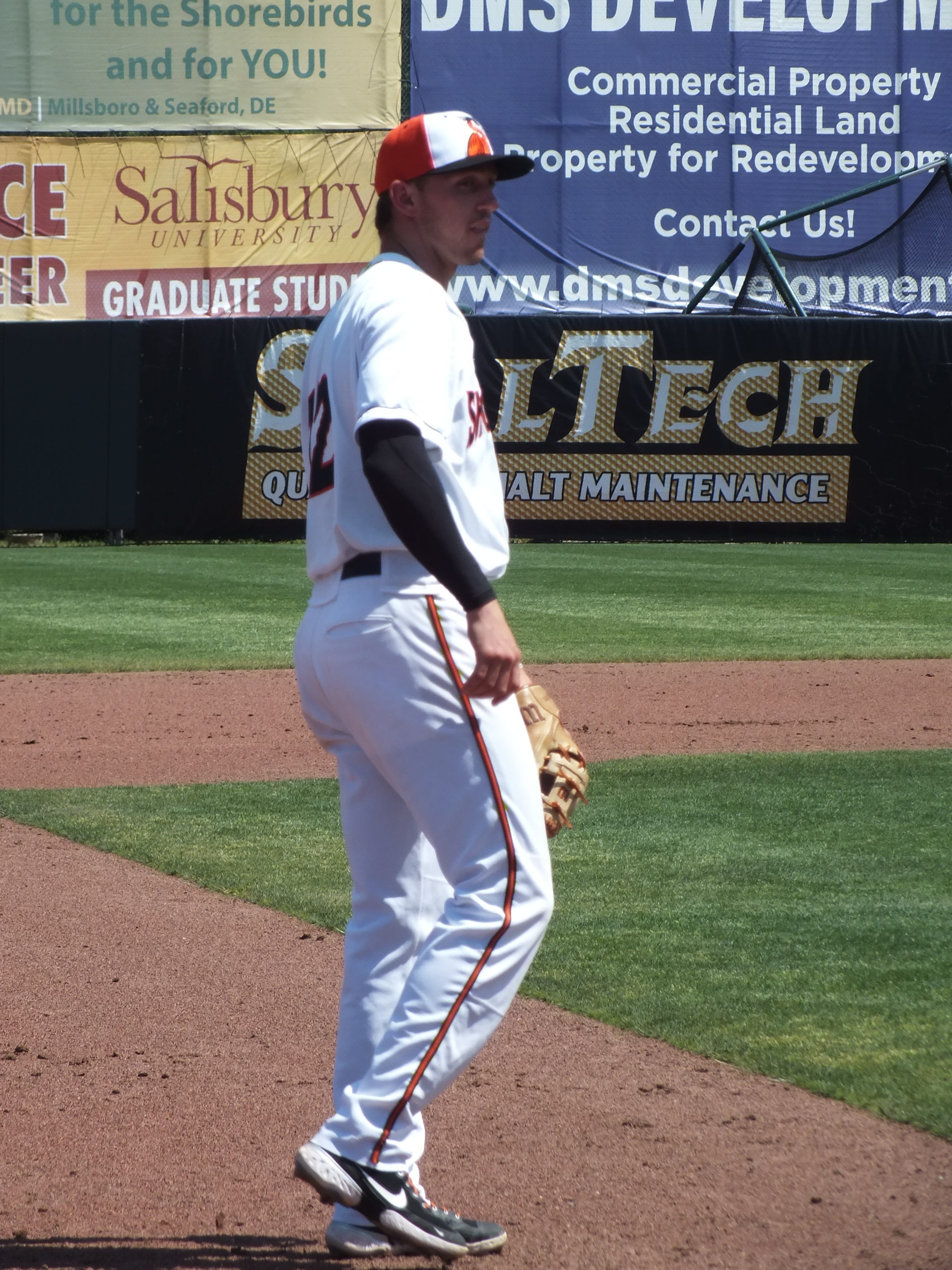
The 2020 draft was unique in that it was only five rounds due to COVID. And with no minor league season to begin their careers, some players were dealt a setback they never recovered from.
For example, the Orioles had a total of six draftees among the five rounds that year, gaining the extra selection as a Competitive Balance pick and selecting that player in the 30th spot because Houston forfeited its first-round pick as part of the penalty for the 2017 sign-stealing scandal. Turns out this player was their best pick insofar as WAR goes at the major league level because Jordan Westburg has become a solid regular for the Orioles. If Houston hadn’t stolen signs, they could have had him.
On the other hand, while Heston Kjerstad (#2 pick overall) and Coby Mayo (4th round) have made the majors, they have been below replacement level. Perhaps part of this wasn’t Heston’s fault, since he lost significant development time, a full season in 2021, thanks to a bout of myocarditis. (A similar fate befell former Shorebird and then-Boston Red Sox pitcher Eduardo Rodriguez.) In Mayo’s case, players selected out of high school are often high-risk, high-reward, as is the case with the oft-injured pitcher Carter Baumler, who was also selected out of high school in the 5th and final round and finally made it to the AA level this past season after a number of fits and starts.
In the second round, Baltimore picked outfielder Hudson Haskin, whose career seems to have stalled out at AAA as he hit under .200 for 2025 in an injury-marred season that included a few games rehabbing for Delmarva (where he was 0-for-7.) Through 2022, Hudson seemed to be on track for Baltimore after a nice season at AA Bowie, but the last three seasons have been a struggle. Hudson may share the same professional fate as third-rounder Anthony Servideo, an infielder who was released by AA Chesapeake in August after a four-season lack of success at the plate, let go with a career .170 average in the minor leagues.
The 2020 draft is worth reviewing because it had a distinct lack of minor-league fodder that was the rule for lower-round picks in previous years. Prior to 2019, teams had 40 to 50 rounds (or more in some years) to fill out their minor league rosters. Once in awhile you’d see a 35th round guy make it all the way to the Show, but generally these were the guys who you’d build the Delmarva roster around, hoping to catch lightning in a bottle or a diamond in the rough. Those selected in the first five rounds, though, are figured to be more or less sure things to make the majors, even as backups. Now with 20 rounds, it’s not likely someone in the 15th round will ever make it past AA.
If you use WAR as a measuring stick, the Orioles have a collective 3.7 WAR from the three players who have made the majors so far (with two other possibilities.) So I decided to do a fun few hours of research and see just how their draft has stacked up with other teams.
The first category is players remaining with the organization, or who made it to The Show with them before leaving later. With a maximum of seven players a team could draft (unless a trade was involved) the Orioles have a pretty good percentage.
100% - Chicago Cubs
83% - Baltimore, Colorado, Detroit, Washington
80% - Arizona, Milwaukee
75% - Atlanta, Minnesota
71% - St. Louis, San Francisco
67% - Cleveland, Kansas City
60% - Chicago White Sox, Texas
50% - Houston, both Los Angeles teams, Miami, Pittsburgh
40% - Oakland
33% - New York Yankees, Seattle
25% - Boston
20% - Toronto
17% - Cincinnati, San Diego, Tampa Bay
0% - New York Mets, Philadelphia
On the extremes, the Cubs retain all five of their drafted players but only one has made it to The Show - the others are in various stages of their minor league careers. For the Mets and Phillies, their approach was radically different, as they each traded all but one of their picks (who was released) for players already in the big leagues, with dramatic results as you’ll see.
Probably the worst team as far as 2020 drafting goes is Cincinnati: out of six players drafted, two were released, one retired, one made it to the bigs, one was traded, and the last one was waived. Similarly, the Rays have released three of their six picks already.
The next category looks at WAR among the players who have been drafted and made The Show for that team. The aforementioned Westburg was the best individual contributor to the Orioles’ cause and is right up there for the entire 2020 draft, behind Atlanta’s Spencer Strider and Masyn Wynn of St. Louis.
Atlanta - 10.2
Detroit - 7.7
St. Louis - 6.0
Chicago White Sox - 5.9
San Francisco - 5.2
Pittsburgh - 4.8
Los Angeles Angels - 4.6
Milwaukee - 4.3
Baltimore - 3.7
Oakland - 3.6
Texas - 3.3
New York Yankees - 2.7
Cleveland, Los Angeles Dodgers - 1.2
Arizona - 1.1
Chicago Cubs - 0.6
Kansas City - 0.3
Boston, Cincinnati, Miami, Minnesota, New York Mets, Philadelphia. San Diego, Toronto - 0.0
Tampa Bay - (-0.1)
Washington - (-0.3)
Colorado - (-0.5)
Houston, Seattle - (-0.7)
If you have no direct WAR from the 2020 draft five years later, that’s not a good sign.
I have one more category, which I decided to add once I realized that there were a total of 37 trades involving these players - as I noted above, many of these draft choices were sent to other organizations in return for established players. And no team cleaned up on this one like the New York Mets, who got five seasons of Francisco Lindor and 27.3 WAR in a big trade with Cleveland. As part of that deal, the Indians (at the time) got a young infielder the Mets picked in the Compensation B round named Isaiah Greene, who washed out of the Cleveland organization after four seasons and was last seen trying to resurrect his career last year in the MLB Draft League for Frederick. What a bahgain, eh?
This is the WAR teams received that includes those players traded for, and the list is a LOT different.
New York Mets - 33.3 (5 trades)
San Diego - 26.0 (4 trades)
Atlanta - 10.2 (no trades)
Detroit - 7.7 (no trades)
Chicago White Sox - 6.6 (1 trade)
Pittsburgh - 6.1 (2 trades)
St. Louis - 6.0 (no trades)
Texas - 5.5 (one trade with 2 draft choices)
Seattle - 5.4 (3 trades)
Toronto - 5.3 (2 trades)
San Francisco - 5.2 (no trades)
Oakland - 5.1 (2 trades)
Los Angeles Angels - 4.7 (1 trade)
Milwaukee - 4.2 (1 trade)
New York Yankees - 4.1 (2 trades)
Baltimore - 3.7 (no trades)
Kansas City - 2.6 (1 trade)
Miami - 2.2 (3 trades)
Cincinnati - 1.7 (1 trade)
Los Angeles Dodgers - 1.6 (1 trade)
Cleveland - 1.2 (no trades)
Arizona - 1.1 (no trades)
Tampa Bay - 1.1 (2 trades)
Philadelphia - 0.9 (3 trades)
Boston - 0.7 (2 trades)
Chicago Cubs - 0.6 (no trades)
Minnesota - 0.0 (no trades)
Washington - (-0.3) (no trades)
Colorado - (-0.5) (no trades)
Houston - (-0.7) (no trades)
Those bottom four teams were among the most woebegone this past season, particularly the fall of Houston after several years of playoff success. But their minor league system is now among the thinnest.
It’s interesting that the two teams who made the most trades ended up getting great value from the deal; however, I did not gauge how the players traded away fared. Obviously the Lindor deal was a huge success for the Mets, but the Indians got other players as well who may have served them successfully. Seattle also used their draft choices to go from the bottom of one list to the top 10 in the other.
While you always have the fear of giving away a 22nd round pick who turns out to be a Hall of Famer as Detroit did to get a one good half-season of Doyle Alexander (then a couple bad seasons), generally trading for the known quantity is working for these teams. For every John Smoltz Atlanta gets for a veteran Alexander, there are probably a hundred Isaiah Greenes who never get very far, even as high draft picks.
So maybe Mike Elias should have pulled the trigger on a 2020 pick back in 2022-23 instead of standing pat.